
About the Event
EAL Level 3 Award in the Requirements of Fire Detection and Fire Alarm Systems for Buildings BS 5839-1:2025
Don’t Risk Lives — Get Qualified to Sign Off Fire Alarm Works
Fire safety is not optional. It’s life-saving.
Grenfell Tower is a devastating reminder: when fire systems fail, people die. Seventy-two innocent lives were lost — and a major factor was lack of competency in fire protection responsibilities.
If you design, install, commission, or maintain fire alarm systems, you must understand BS 5839-1:2025 inside and out — and be able to prove it.
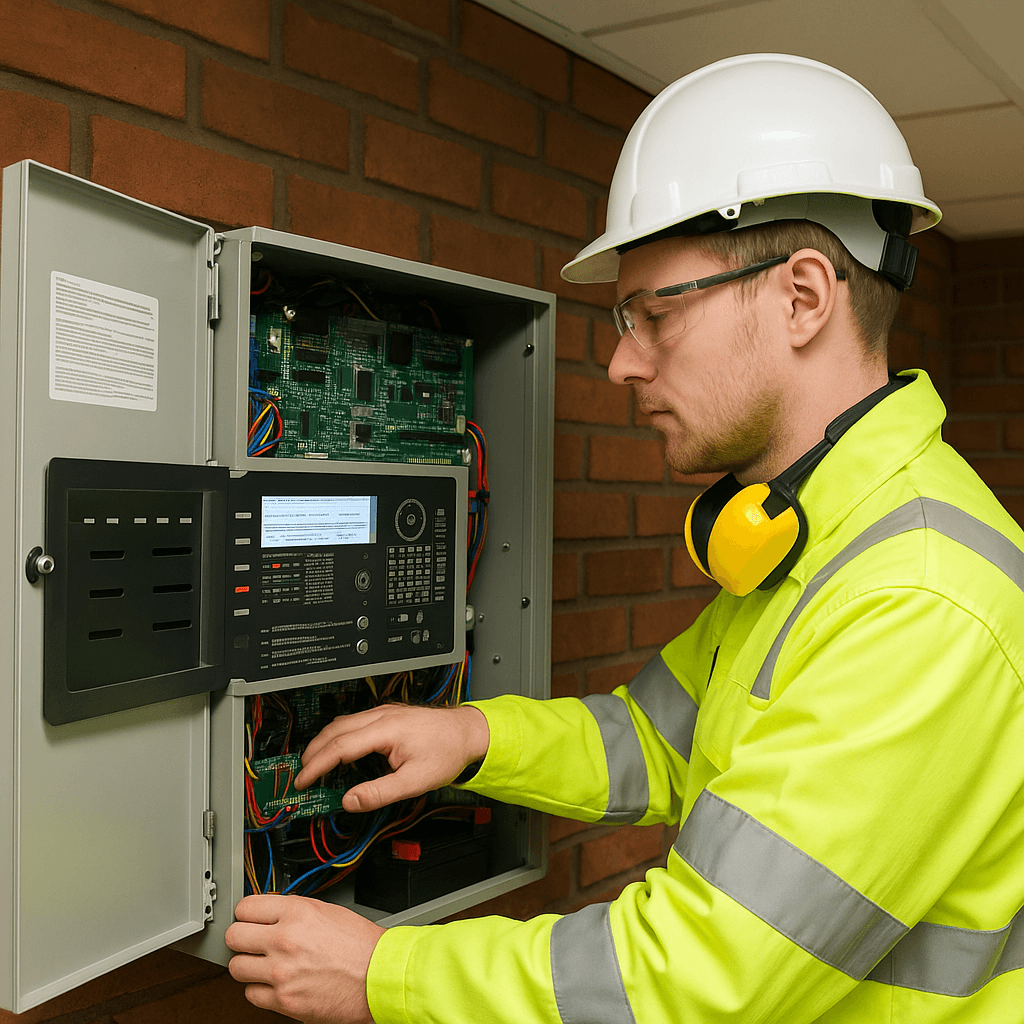
EAL BS 5839 Part 1 Fire Alarm Course – Accredited & Hands-On
Course fee: £1075.00 + VAT
Course duration: 5 days
What You Will Learn
Core Fire Alarm Systems Knowledge
-
Fire Alarm System Fundamentals: Understanding the basic components and how they interact (detectors, control panels, notification appliances). *
-
Types of Fire Alarm Systems: The differences, applications, and requirements for Conventional versus Addressable fire alarm systems.
-
Fire Detection Technology: In-depth knowledge of various detector types and their proper placement:
-
Smoke Detectors (Ionization vs. Photoelectric)
-
Heat Detectors (Fixed Temperature vs. Rate-of-Rise)
-
Specialty Detectors (Beam, Aspiration, Flame Detectors).
-
-
Control Panel Operation: How to program, interpret fault codes, and operate the main control unit for different manufacturers or types of systems.
-
Notification Appliances: Correct siting and selection of sounders (audible) and visual alarms (strobes) to meet regulatory requirements for audibility and visibility.
Compliance, Standards, and Best Practices
-
Relevant British Standards (or local equivalent): Detailed study of the relevant standards governing design, installation, and maintenance (e.g., BS 5839-1 for non-domestic premises, or BS 5839-6 for dwellings). *
-
System Categories: Understanding the different system categories (e.g., P1, P2, M, L1, L2, L3, L4, L5) and selecting the correct category based on the building’s specific risk profile.
-
Fire Risk Assessment Link: How fire alarm requirements are derived from a formal Fire Risk Assessment of the premises.
-
Wiring and Power Supplies: Correct wiring methods, cable types, standby power calculation, and testing for power supply units (PSUs).
-
Installation Procedures: Best practices for physically installing detectors, call points, and control panels, avoiding common installation pitfalls.
-
Requirements of BS 5839-1:2025 and Key Changes
You will learn the specific requirements outlined in the latest edition of the standard BS 5839-1:2025, focusing on recent updates:
-
Understanding the Standard’s Scope: The requirements for the design, installation, commissioning, and maintenance of fire detection and alarm systems in non-domestic premises.
-
Preparing for Final Assessments & Mock Assessment
This part of the course focuses on converting knowledge into exam success:
- Exam Structure and Format: Understanding the format of the final assessment (e.g., multiple-choice, open-book, pass/fail grading, time limits).
- Self-Study Strategy: Guidance on how to effectively study the detailed standard (BS 5839-1:2025) and accompanying learner manuals, including the importance of early enrolment for pre-learning.
- Open-Book Exam Technique: Strategies for quickly navigating the standard document during the exam to find specific clauses and figures referenced in questions.
Prove Your Competency with an Ofqual-Approved Level 3 Qualification
Navigating the complexities of BS 5839 Part 1 can be challenging. But simply knowing the standards isn’t enough. You need to demonstrate proven competence.
That’s where our BS 5839 Part 1 Course comes in — preparing you to achieve the nationally recognised, Ofqual-approved Level 3 qualification that helps you meet legal expectations, BAFE scheme requirements, and industry best practice.

Why This Qualification Matters:
✅ It’s Legally and Professionally Essential
BAFE and other fire safety regulators increasingly demand qualified individuals. An accredited Level 3 certificate is your proof of competence.
✅ It’s Nationally Recognised
An Ofqual-approved qualification is a gold standard in the UK — recognised by employers, clients, and auditors alike.
✅ It Builds Your Reputation
Gain credibility and trust from contractors, clients, and certifying bodies. Show that you know what you’re doing — and have the certificate to back it up.
✅ It Boosts Your Career
Be the go-to fire alarm expert. Open doors to higher-paying roles and new business opportunities.
✅ 99% pass rate— Confidence Our Pass Rate Speaks for Itself.
VIEW COURSE SCHEDULE AND BOOK NOW
What You’ll Get From This Course
-
📘 Mastery of BS 5839-1:2025 — Deep understanding of the latest fire detection and alarm standards
-
🛠️ Practical Skills — Apply what you learn to real-world installations, maintenance, and commissioning
-
📄 Certification — Gain an Ofqual Level 3 qualification that proves you’re not just capable — you’re compliant
-
💼 Confidence — Know you’re meeting all regulatory, legal, and safety requirements